Landed House Interior Design Ideas in Singapore: What to Know Before You Renovate
Moving into a landed home often feels like a milestone rather than just a move. For many homeowners, it’s the first time they experience real spatial freedom. More room to breathe, more privacy, and the simple luxury of not sharing walls on both sides. That excitement, however, usually comes with a longer list of renovation decisions than expected.
This guide pulls together interior design and renovation insights homeowners usually only learn halfway through a landed house interior design renovation.
What Makes Landed House Interior Design Unique in Singapore
Designing a landed home is very different from working on an apartment.
While there is more freedom, there is also more responsibility. Decisions that feel minor in a condo like window placement, ceiling height, or circulation space tend to have a much bigger impact in landed houses. That’s why early planning matters far more than most homeowners initially expect.
With Singapore’s warm and humid climate, landed homes need to breathe well. Unlike high-rise units, you often have more freedom to bring in light from different angles, through windows, courtyards, or sliding doors.
Good landed house interior design responds directly to these conditions. Layouts are planned to promote cross-ventilation, control heat gain, and bring daylight deeper into the home. When done well, the house remains comfortable throughout the day without relying excessively on air-conditioning.
Landed House Interior Design Ideas from Renozone Homes
Modern Tropical Living That Feels Calm and Effortless
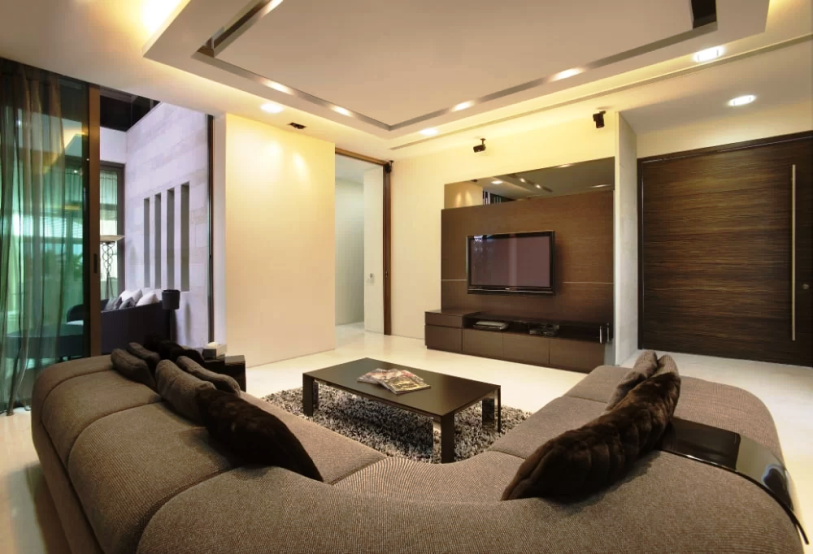
Looking at the living room at 5B Lynwood Grove, the first thing you notice is how bright and open the space comes together. Natural light pours in, making the room feel fresh from morning through to late afternoon.
The palette is kept intentionally soft, with warm timber tones used to anchor the space and prevent it from feeling overly bright or clinical.
The kitchen area continues this easy, family-friendly feel. The island becomes a natural gathering point, whether it’s for quick breakfasts, casual chats, or helping children with homework while meals are being prepared.
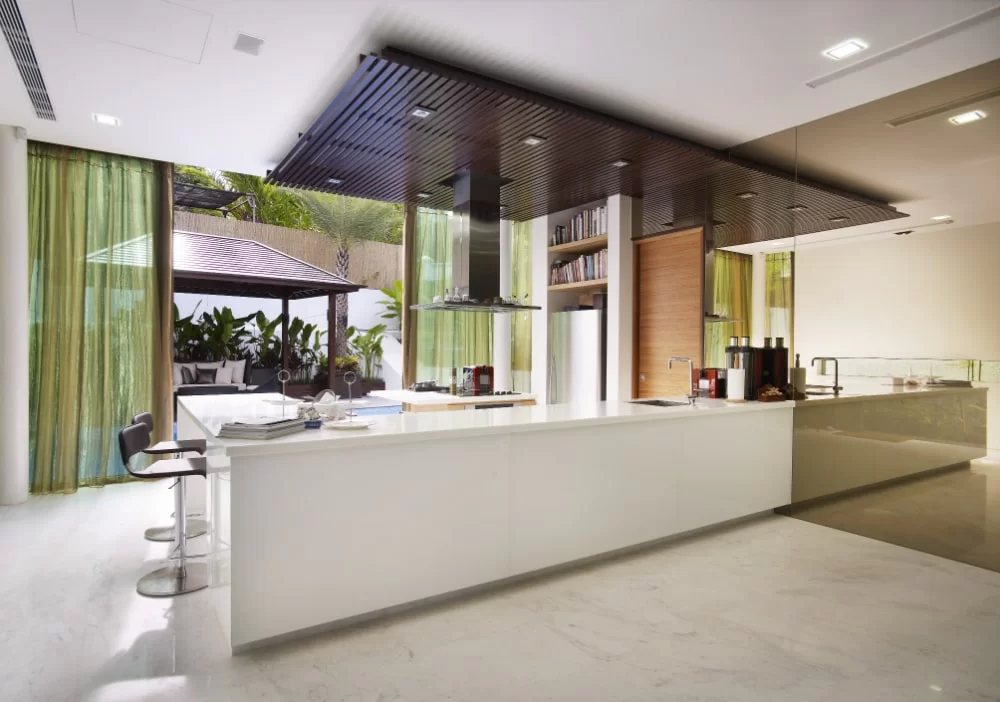
Clean lines help keep the space visually organised, while warmer finishes prevent the interiors from feeling stark. A balance that is especially important in larger landed living areas.

The bedroom at Blk 54 Jalan Ma’Mor shows another side of modern tropical design, calm and restful. The bedroom is designed to be visually quiet. Muted colours and natural textures reduce visual noise, making it easier to unwind at the end of the day, especially in homes where the rest of the house is more open and active.
Smart, Spacious Homes for Modern Families
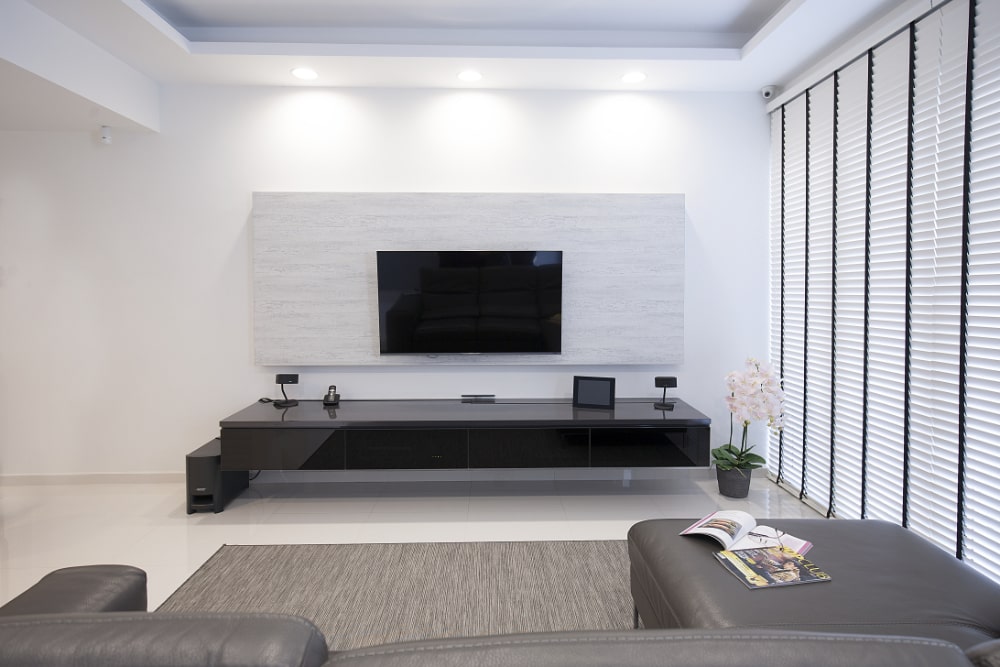
The living and dining area at 65 Soo Chow Garden reads as generous and calm the moment you look at it. The open layout allows the spaces to connect naturally, so family members can be in the same area without feeling on top of one another.
What stands out is how naturally the space supports daily routines.
Instead of strong visual separations, the layout allows clear sightlines between living, dining, and kitchen areas. This makes it easier for family members to share the same space while doing different things. And it’s a common requirement in landed family homes.
The clean lines keep everything looking neat, while warm neutral colours soften the overall feel.
At 7 Gerald Terrace, the approach is slightly different but just as family-friendly.
The layout is as thoughtful and balanced, making good use of the length of the home. The living space is welcoming rather than formal, with a layout that encourages movement and interaction.
This kind of planning is especially useful for terrace houses, where the goal is often to make the home feel open without losing comfort. You get a layout that works in practice, not just in photos. It supports daily movement, casual interaction, and long hours at home without feeling restrictive or overly formal.

Clean Minimalism & Timeless Elegance
Two Renozone projects, 128 Jalan Gembira and 253B Onan Rd., are fine minimalist examples to explore. While they follow different design directions, both share a careful balance between style and livability.
At 128 Jalan Gembira, bold minimalism takes centre stage.
The feature wall draws attention through restraint rather than decoration. Its simplicity works because the proportions and finishes are carefully controlled, allowing the design to feel intentional rather than empty. Clean surfaces and strong shapes give the space a quiet presence.

The mood shifts towards contemporary classic in 253B Onan Rd. Marble surfaces and subtle brass accents introduce a sense of elegance that is timeless rather than trendy.
What’s nice here is how the materials are used with restraint. The finishes add richness, but they don’t overpower the space.
Homeowners who value clarity and order find minimalist interiors appealing. But they only work well when warmth is deliberately introduced through materials and lighting. Without this balance, larger landed spaces can quickly feel impersonal.
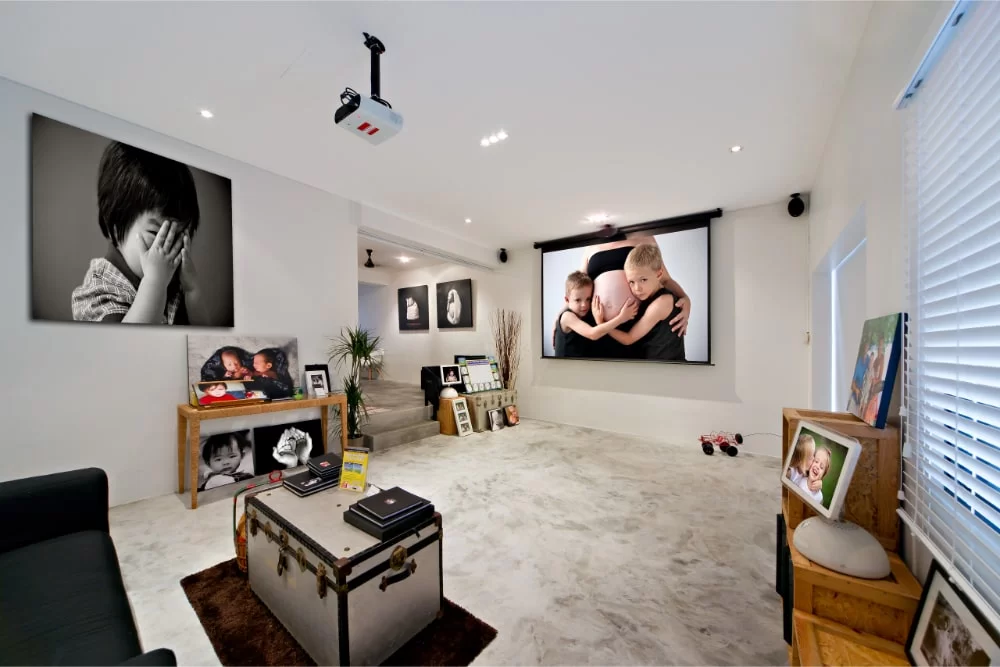
In landed homes, where spaces are often generous, this approach works especially well. Instead of filling every corner, the design lets form and proportion do the work. The result feels refined, not bare.
Indoor-Outdoor Living That Only Landed Homes Can Offer
The project at 11 Jalan Tari Serimpi shows how outdoor connection can be designed in a natural and effortless way.
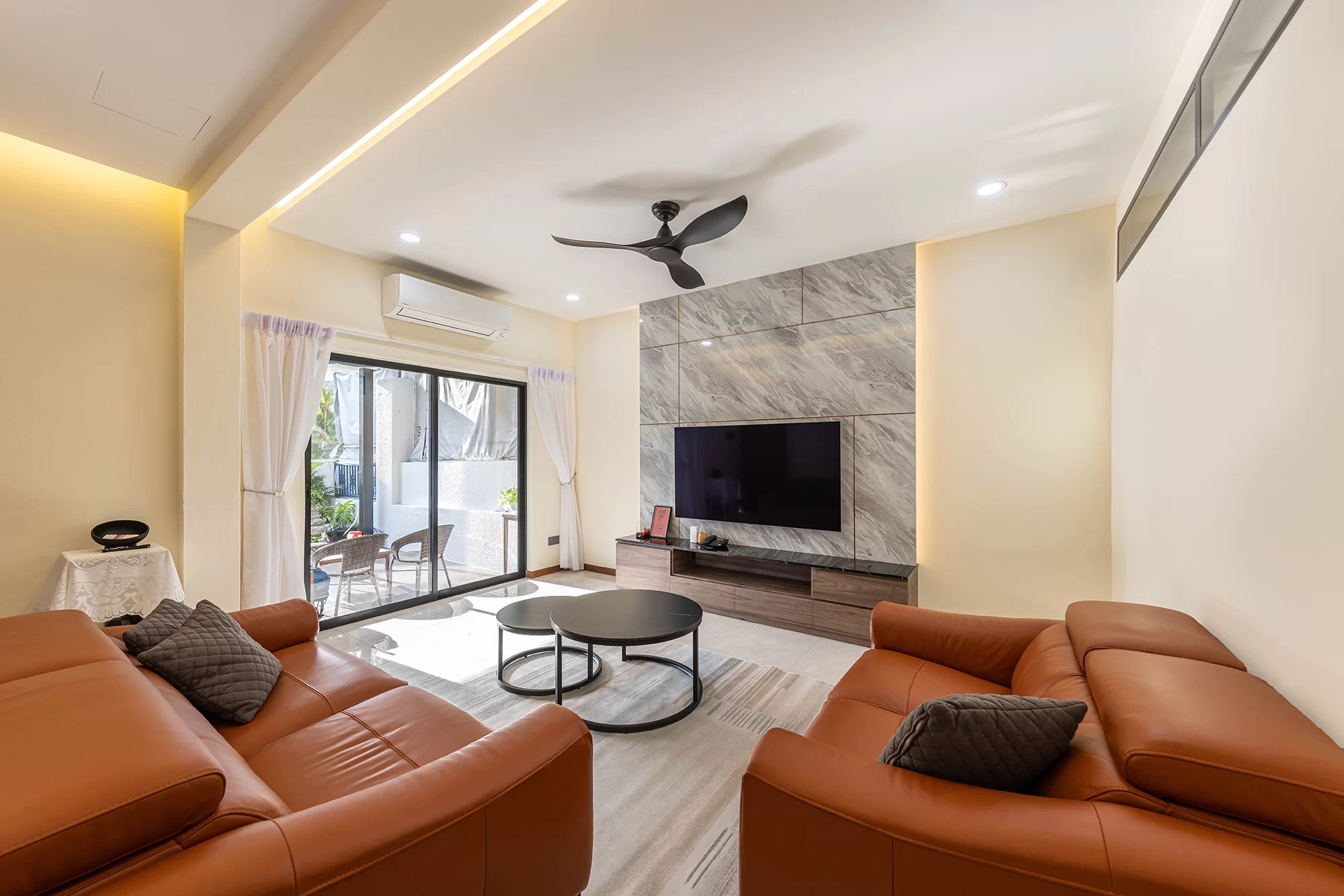
At 11 Jalan Tari Serimpi, the living area is deliberately planned to maximise daylight without overheating the space. Large openings allow light to flow in easily, making the room feel fresh and airy rather than enclosed.
The transition from indoor to outdoor areas is where this home really shines. Instead of treating outdoor areas as separate zones, the design allows the garden or patio to function as a genuine extension of the living space.
Large openings, level flooring transitions, and consistent finishes help blur the boundary between inside and out.
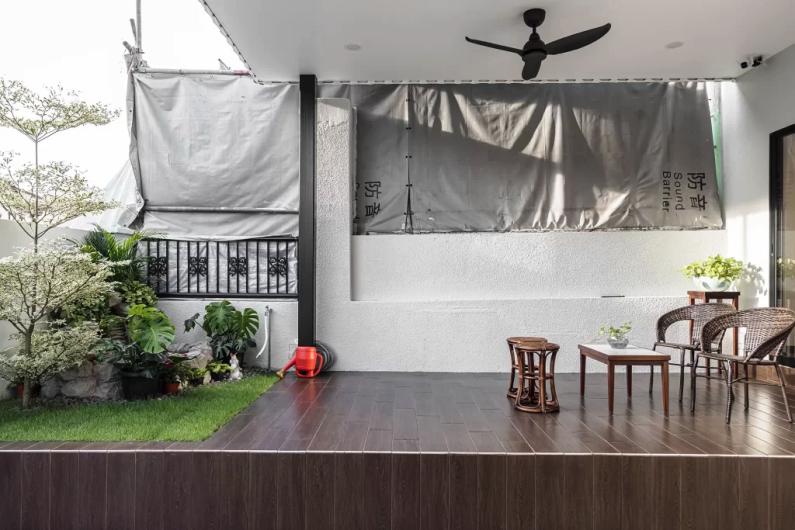
Whether it’s opening the doors for better airflow or stepping outside to relax, the connection adds a new layer to daily living. This connection supports both everyday use and casual entertaining — from leaving doors open for ventilation to using the outdoor area as an informal extension of the living room in the evenings.
What Homeowners Often Overlook When Planning a Landed House Renovation
Whether it’s a terrace house, semi-detached home, or bungalow, landed renovations come with very different spatial and structural considerations.
One of the most common issues homeowners face is underestimating how many decisions must be made upfront. In landed homes, layout, structure, and building services are closely linked, so late changes often trigger a chain reaction that affects cost, timeline, and approvals.
Structural changes are another area where surprises can arise. Landed homes, especially older ones, may come with existing conditions that only surface once work begins. Your design may need adjusting to work around beams, columns, or older construction methods. These moments are manageable, but they require calm problem-solving and clear communication.
When the renovation process is structured properly, homeowners spend less time resolving site issues and more time making informed decisions about how they want to live in the home long term.
Budgeting for Landed House Interior Design in Singapore: What Really Drives Costs
Instead of focusing on figures in your budget, it helps to understand the key cost drivers. It gives you clarity, control, and fewer surprises along the way.
Structural Work Changes the Game
One of the biggest cost drivers in landed renovations is structural change. This includes works like reconfiguring layouts, opening up spaces, or making adjustments to better suit modern living.
For some homeowners, the project may be a lighter refresh, focusing on finishes, carpentry, and layout improvements without touching the structure. Others may be planning a major renovation, where walls, staircases, or floor layouts are reworked to improve flow.
Then there are homes that require A&A renovation process, where the scope goes beyond interiors and involves formal approvals and deeper construction work. Each level of work brings a very different level of planning, coordination, and responsibility.
Carpentry Is Often the Quiet Cost Driver
In landed homes, carpentry tends to play a much larger role. Custom storage, feature walls, wardrobes, kitchens, and built-in units are often designed specifically for the home.
What affects cost here isn’t just size, but complexity and detail. Clean lines, hidden handles, curved elements, or seamless finishes all require more time and skill to execute well. When done right, good carpentry adds long-term value and daily comfort, which is why it’s rarely an area homeowners regret investing in.
Why Good Planning Often Saves Money
It may sound counterintuitive, but professional planning often helps homeowners avoid unnecessary spending. Clear drawings, realistic timelines, and early coordination between trades reduce changes later on. And changes are really where costs tend to grow.
In landed house interior design, small decisions have bigger ripple effects. Thoughtful planning helps prioritise what truly matters, whether that’s long-term durability, better space usage, or future flexibility for the family.
For homeowners considering deeper works, understanding the renovation or A&A process early also helps set realistic expectations and prevents costly missteps down the line.
Why Experience Matters for Landed Homes
Landed homes in Singapore come with layers of regulations. There are planning guidelines, building requirements, and approvals that need to be handled carefully. For homeowners, local compliance can feel confusing and overwhelming.
An experienced team understands how to navigate these requirements efficiently, often identifying potential compliance issues early. You’ll be better off addressing these issues before delays during submission or construction.
Over the years of designing and renovating homes, a significant number of Renozone projects have been landed homes, each with its own set of challenges and needs. This depth of experience allows the team to anticipate issues before they arise. You know that your home is in capable hands from the first discussion to the final handover.
When it comes to landed house interior design, experience isn’t about doing things the old way. It’s about knowing what works, what doesn’t, and how to create a home that’s right for years to come.
Renovating Your Landed Home the Right Way
If you’re at the early stages, sometimes all you need is a proper conversation. One where you can ask questions, talk through ideas, and understand what’s possible without pressure or hard selling. Having an experienced team guide you through the process often make the journey clearer and more enjoyable.
The goal isn’t to rush decisions, but to offer steady guidance based on years of hands-on experience with landed homes across Singapore.
Thinking about your own landed home renovation?
You’re welcome to speak with the team for a no-obligation consultation. Book a consultation to discuss your plans at your own pace. Or reach out via WhatsApp if that’s more convenient for you
Most useful first step is a practical conversation. And the focus that remains on constraints, priorities, and realistic options rather than rushing into design decisions. The design clarity early on will set the foundation for a smoother renovation journey.
At Renozone, we bring your design dreams to life. From innovative 4 room HDB renovation ideas to elegant 5 room HDB renovation ideas, we’re dedicated to creating spaces that are both beautiful and functional. Our expertise also extends to landed property design and commercial renovation. Trust Renozone, Singapore’s best interior design company, to elevate your home or workspace with style and care.
Est. Since 1998
Renozone Interior Design
Renozone Interior Design is one of Singapore's reputable interior design companies since 1998. With our well-tested professional capabilities, client-oriented service, and attention to detail, we ensure our client needs are fulfilled and met beyond their expectations. Our extensive portfolio comprises high-profile projects in both residential (HDB, condo, landed properties) and commercial interior designs.
Services We Provide:
Accreditations
Trusted By Clients








Accreditations
Trusted By Clients