BTO Renovation Process in Singapore: Step-by-Step Guide for New Homeowners
Getting your new BTO flat not only marks the beginning of a new life chapter, but it also gives homeowners an opportunity to turn a blank canvas into the home of their dreams. However, the change can sometimes feel overwhelming, especially for homeowners who are stuck in the maze of HDB permits, renovation packages and contractor decisions.
This guide is your way out! It covers everything you need to know: from planning and budgeting to permits, construction, and final handover. With nearly 30 years of experience in transforming HDB flats across Singapore into comfortable homes for families, Renozone is here to make your renovation journey smooth and stress-free.
Introduction
Unlike resale flat renovations, BTO renovations generally require less hacking and structural work. However, turning a HDB Build-To-Order flat from its bare, developer-finished state into a fully personalised, liveable home still requires careful planning, permit approvals, and coordination across multiple trades.
That said, a BTO renovation still involves multiple trades working together in sequence: hacking (where applicable), plumbing, electrical works, tiling, carpentry, painting, and finishing. The entire process, from getting the BTO keys from your HDB to finally moving in, typically spans 3 to 5 months, depending on flat size and the complexity of your design.
From 3-room BTO renovations in Clementi to 5-room BTO Sengkang renovations and everything in between, the fundamental process remains the same: what changes is the scale, the budget, and the design possibilities.
When Can You Start Renovating Your BTO Flat?
You can start renovating your BTO flat as soon as you get the keys. You may have to wait for the HDB Renovation Permit to be approved before you begin the physical renovations. The Permit usually takes 1 to 3 weeks to arrive.
It is also recommended that you connect with your interior designer 1-2 months before you receive your keys, so you can finish planning by the time your permit arrives. Here is a realistic timeline for your home renovation:
| Milestone | Expected Time |
| Engage ID/contractor | 1–2 months before key collection |
| Defects inspection | Within 7 days of key collection |
| Submit HDB permit application | Within 1–2 weeks of key collection |
| Permit approval (estimated) | 1–3 weeks after submission |
| Renovation works beginExpected move-in | Upon permit approval3–5 months after key collection |
BTO Renovation: Step-by-Step Timeline
Step 1: Planning Your BTO Renovation (Budget, Needs & Priorities)
Before getting in touch with any designer or finalising the interior design, take a moment and think about what you actually need from your home. Think of your lifestyle, daily routine, storage and space requirements.
Start with a realistic budget. As a general guide for 2025–2026, BTO renovation costs in Singapore range as follows:
| Flat Type | Basic Package | Mid-Range | Full Custom |
| 2-Room Flexi | S$15,000-S$25,000 | S$25,000-S$40,000 | S$40,000+ |
| 3-Room BTO | S$20,000-S$30,000 | S$30,000-S$50,000 | S$50,000+ |
| 4-Room BTO | S$25,000-S$40,000 | S$40,000-S$65,000 | S$65,000+ |
| 5-Room BTO | S$35,000-S$55,000 | S$55,000-S$85,000 | S$85,000+ |
Always set aside a contingency buffer of 10 – 15% on top of your quoted budget to account for unforeseen works or material upgrades.
Step 2: Engaging an Interior Designer or Contractor
Choosing between an interior designer (ID) and a renovation contractor depends on how much design input and project management support you need. An experienced ID will handle everything, which gives you great peace of mind as a homeowner.
What to Look for in a BTO Renovation Contractor
Once you finalise an Interior Designer, ask them for the following things:
- HDB registration under the Directory of Renovation Contractors (DRC)
- CaseTrust accreditation
- Portfolio of completed BTO projects similar in scope and style to your vision
- Clear, itemised quotation with no hidden charges
Step 3: Designing Your BTO Layout and Space Planning
Good space planning is one of the most important parts of designing a fully functioning BTO Flat. Work with your interior designer to make square footage count. Key considerations include traffic flow between rooms, natural light and ventilation, placement of built-in carpentry, and zoning of open-concept living and dining areas.
Popular BTO design styles that we went for during our renovation projects are:
Modern Minimalist
Modern minimalist interiors emphasise clean lines, neutral colours, and clutter-free spaces. Built-in storage and simple finishes help create a sleek and functional environment. This style works well for homeowners who prefer a timeless and low-maintenance design. Look at how we have used modern minimalist in Blk 457B Sengkang West Road, a 2-Room HDB Flexi

Japandi
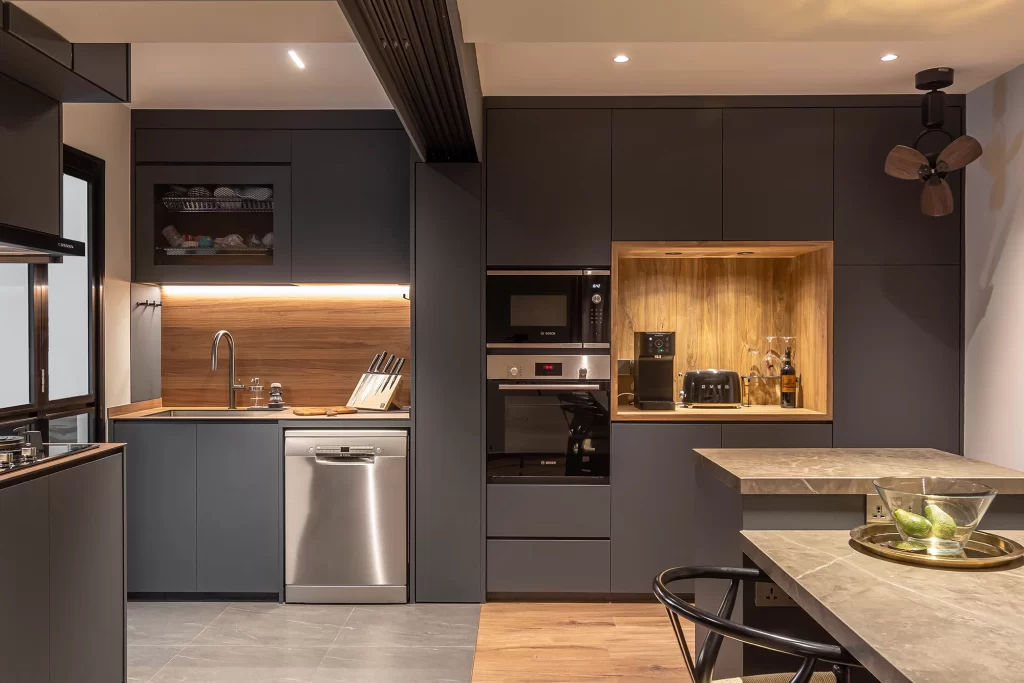
Japandi design blends Scandinavian warmth with Japanese simplicity for a calm and balanced look. Natural wood tones, soft colours, and minimal decor create a cosy yet airy atmosphere. It is ideal for homeowners who want a peaceful and functional living space. Here is how we turned the regular kitchen in Blk 648C Tampines St 62, a 5-Room HDB BTO into a Simple Japandi Style kitchen.
Industrial Chic
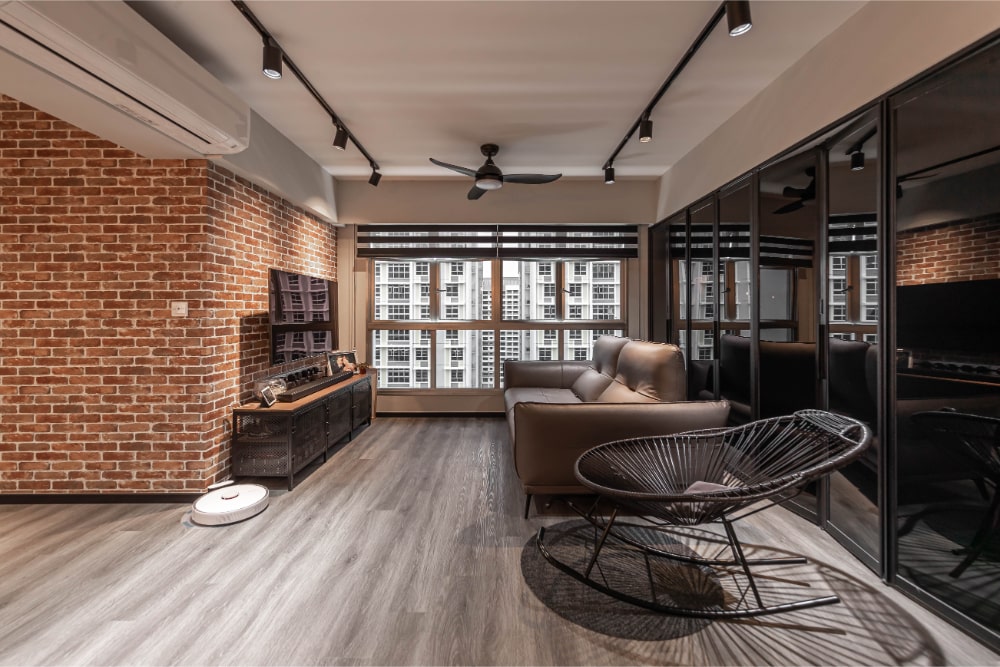
Industrial chic interiors highlight raw textures such as concrete, metal, and darker tones. Exposed elements and matte finishes add character while maintaining a modern feel. This style suits homeowners looking for a bold and urban-inspired design.Here is how the living room in Blk 405B Northshore Drive, our 4-Room HDB BTO looked like after renovation.
Contemporary Resort
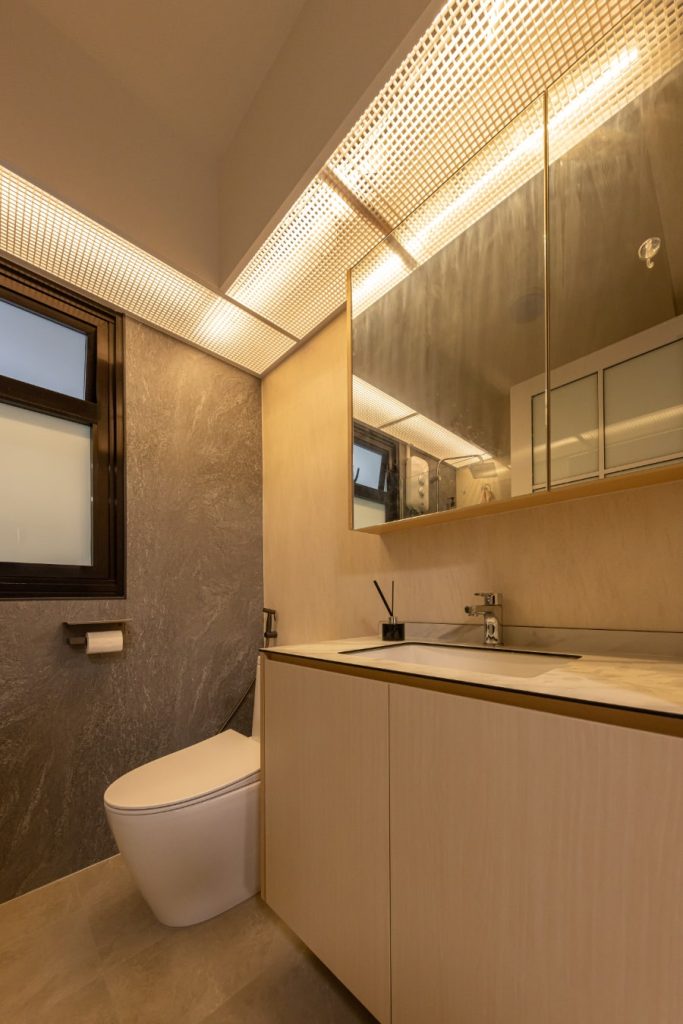
Wood accents, soft lighting, and clean lines help create a hotel-like ambience at home is what contemporary resort feels like. It is perfect for homeowners who want a bright, calm, and luxurious living environment. Here is how the bathroom in Blk 112B Alkaff Crescent, a 4-Room HDB Resale turned out.
Each one of these designs can be adapted across 3-room, 4-room, and 5-room BTOs.
Step 4: Setting Your Renovation Budget and Timeline
Once your design is finalised, ask your contractor to produce a detailed, itemised quotation. Review this carefully and ensure the following major cost components are included:
| Component | Budget Percentage |
| Carpentry (Cabinets & Wardrobes) | 40 – 50% |
| Electrical & Lighting | 10 – 15% |
| Floors & Tiles | 10 – 20% |
| Painting & Finishing | 5 – 8% |
| Plumbing | 5 – 8% |
Agree on a clear project timeline with defined milestones before signing any contract.
Step 5: Applying for HDB Renovation Permits and Approvals
All BTO renovation works require a valid HDB Renovation Permit before any physical work can begin. Your HDB-registered contractor or ID will submit the permit application on your behalf, along with the relevant floor plans and details of proposed works.
Key HDB Rules Every BTO Homeowner Must Know
- Structural walls are strictly off-limits for hacking.
- Bathroom and toilet floor and wall tiles cannot be removed or altered within the first three years after the block’s completion.
- Renovation activities are only permitted on weekdays from 9 am to 6 pm, and on Saturdays from 9 am to 1 pm.
- All renovation work must be finished within three months of obtaining the permit.
- The renovation permit notice must be visibly displayed outside your flat throughout the entire renovation period.
- Concealed wiring should be installed within trunking or behind a false ceiling.
Step 6: Hacking, Electrical and Plumbing Works
Once you get your permit approved, you can start physical renovations. This phase covers hacking, electrical, and plumbing
- Hacking: Removal of non-structural partition walls or HDB-provided finishes where permitted
- Electrical rough-in: Running of new wiring, installation of additional power points, air-conditioning piping routes
- Plumbing: Repositioning of sanitary fittings (within HDB-permitted limits), sink connections, and waterproofing of wet areas
This phase typically takes 1–2 weeks and must be completed before tiling and carpentry can begin.
Step 7: Flooring, Tiling and Structural Works
Once the rough-in phase is complete, the flooring and tiling work begins. This stage involves wet tasks such as screeding, waterproofing, and laying tiles in the kitchen, service yard, and, except where the HDB 3-year restriction applies, the bathrooms.
- Vinyl planks, homogeneous tiles, or engineered timber can be used for living and bedroom flooring.
- Ceramic and porcelain tiles for the kitchen wall and floor.
- Non-slip tiles for the service yard.
- False ceiling works (if applicable)
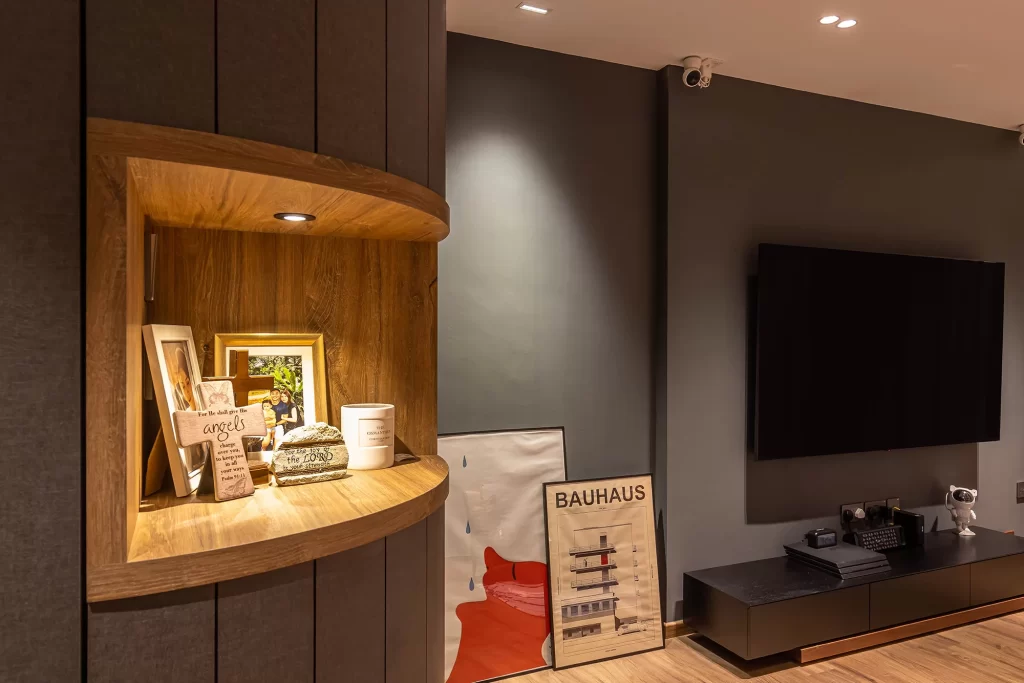
Look at how the living space turned out in Blk 648C Tampines St 62, 5-Room HDB BTO after tiles and timber works.
Step 8: Carpentry, Fixtures and Installation
Carpentry installation is the most visually transformative phase of your BTO renovation and typically takes the longest, 2 to 4 weeks, depending on the scope. Your custom cabinets, wardrobes, kitchen units, TV consoles, and feature walls are fabricated off-site and assembled on-site during this phase.
Common BTO Carpentry Items
- Kitchen: Upper and lower cabinets, integrated hood and hob housing, pull-out drawers
- Master bedroom: Full-height wardrobe with internal fittings, bedhead feature wall
- Living and dining: TV console, feature wall, display shelving
- Common bedrooms: Built-in wardrobes or study desks with overhead storage
Sanitary fittings (basins, shower screens, toilet accessories), door hardware, and light fixtures are also installed during this phase once carpentry is complete.
Step 9: Painting, Finishing and Final Touches
Painting is one of the final stages of home renovation. Once this stage is complete, it makes the home look put together. Most BTO homeowners opt for a base of white or off-white on the ceilings and walls, with one or two feature walls in a bolder tone or textured finish.
- Use low-VOC or zero-VOC paint formulations
- Allow 1–2 coats of primer followed by at least 2 topcoats for a clean, durable finish
- Silicone sealant is applied to all carpentry-to-wall junctions and wet area joints to prevent water ingress
- Glass works, mirror installations, and any remaining light fixtures are fitted at this stage
This phase typically takes 3–5 days and marks the near-completion of your BTO renovation. Look at how refined the living space turned out in Blk 812A Choa Chu Kang, 5-Room HDB BTO after the finishing touches.

Step 10: Cleaning, Inspection and Handover
The final stage before you move in involves a thorough post-renovation clean, followed by a detailed inspection of all completed works with your contractor or ID.
What to Check During Your Final Inspection
- Check that all doors, drawers, and hinges open and close smoothly; inspect for gaps, uneven finishes, or laminate peeling
- Tap tiles to check for hollow spots; inspect grout lines for evenness and completeness
- Test all power points, light switches, and fixtures; ensure air-conditioning units operate correctly
- Run all taps and showers; check for leaks under the sink and at all pipe connections
- Inspect walls under good lighting for drips, uneven coverage, or missed areas
Any defects identified during the final inspection should be documented and rectified by your contractor before you sign off and make the final payment.
How Long Does the BTO Renovation Process Take?
The total BTO renovation timeline from key collection to move-in typically falls between 3 and 5 months. Here is a realistic overview:
Pre-Renovation: This stage lasts from 4 – 8 weeks. It includes checking for defects, getting an interior design, finalising a design and applying for a permit.
Rough Works usually takes 1-2 weeks, and it includes hacking, electrical rough-in, and plumbing
Wet Works Tiling, screeding, waterproofing, and false ceiling are installed during this phase. It usually takes 1-2 weeks for this phase to end.
Carpentry Fabrication & Installation During the next 2 – 4 weeks after wet works, Off-site fabrication, on-site assembly and installation begin.
Finishing touches like painting, silicone and glass works happen in the last week.
The permit approval phase (1–3 weeks) and carpentry fabrication lead time are the two most common causes of delays.
Common Mistakes to Avoid During BTO Renovation
In our years of renovating homes in Singapore, we have seen many homeowners make these mistakes:
- Starting Works Without a Valid HDB Permit
- Many first-time homeowners underestimate the true cost of a BTO renovation and often underbudget.
- A common and costly mistake that homeowners make is not providing their contractor with the exact model specifications of their hob, oven, fridge, and washing machine before carpentry fabrication begins.
- Ignoring the HDB 3-Year Bathroom Rule and attempting to hack bathroom tiles within the first 3 years of the block’s completion date.
- Choosing a Contractor Solely on Price.
Keeping these mistakes in mind before you begin the renovation can help you avoid them and make the process smooth and hassle-free.
Conclusion
The BTO renovation process in Singapore may seem complex at first. But with the right planning, the right team, and a clear understanding of what to expect at each stage, it can be an enjoyable and deeply rewarding experience. From your first design consultation to the moment you turn the key on your finished home, every decision you make shapes the space you will live in for years to come.At Renozone, we have been guiding Singapore homeowners through their BTO renovations since 1998. Whether you are renovating a 2-room flexi, a 4-room BTO, or a 5-room flat in Sengkang, our experienced team handles every detail, from HDB permits and space planning to custom carpentry and final handover. So you can focus on what matters most: making it home.

Est. Since 1998
Renozone Interior Design
Renozone Interior Design is one of Singapore's reputable interior design companies since 1998. With our well-tested professional capabilities, client-oriented service, and attention to detail, we ensure our client needs are fulfilled and met beyond their expectations. Our extensive portfolio comprises high-profile projects in both residential (HDB, condo, landed properties) and commercial interior designs.
Services We Provide:
Accreditations
Trusted By Clients








Accreditations
Trusted By Clients