Landed House Interior Design Singapore: Comprehensive Guide On Ideas, Costs & Tips
There’s a particular kind of excitement that comes with owning a landed home in Singapore. Multiple floors instead of one. A garden that’s actually yours. Rooms you can genuinely close off from the rest of the house. No shared corridors, no MCST committee to answer to, and of course, no neighbours directly above you.
But this freedom is also what troubles homeowners the most. Designing a landed home is way different from designing a flat. Landed homes come with more complexity, more maintenance considerations, and much higher renovation stakes. This also means that their interior design is prone to more mistakes than anything that goes wrong in an HDB or condo renovation.
If you’re planning your landed property interior design in Singapore — whether it’s a terrace, semi-detached, or detached bungalow — here’s what actually matters.
It’s Not About Scale. It’s About Flow.
The most common misconception is that designing a landed house is essentially the same as designing an apartment, just with more rooms to fill.
It isn’t.
What separates great landed interior design from mediocre landed interior design isn’t the quality of the sofa or the choice of floor tiles. It’s circulation. Where most homeowners think about furniture, an expert interior designer plans in a way that movement feels natural. This difference is everything. In a typical Singapore landed home, you’re dealing with multiple levels:
- Ground floor (garage, utility)
- First floor (living, dining)
- Upper floors (bedrooms, family areas)
And all of this is connected by a staircase, the spine of the house. If it’s poorly positioned, poorly lit, or designed, your home may end up feeling disjointed.
Here is how you can make the staircase in your landed property work
- Treat the staircase as a central design feature
- Use open risers or glass balustrades to improve light flow
- Create intentional transitions between floors
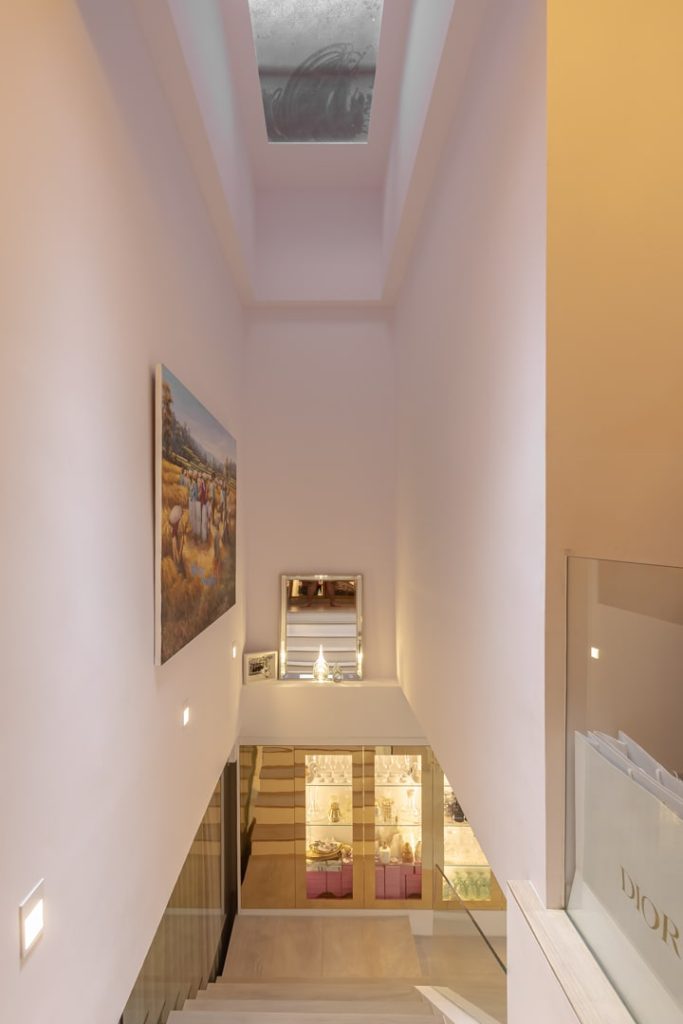
And that is particularly what we did in the staircase of 6 Daisy Avenue
Before you begin, your landed house’s interior design ask yourself:
- Where does movement happen in your home?
- And how can you make that movement feel good?
Lighting in Landed House Interior Design
Singapore’s equatorial sun is both a blessing and a problem. In a landed home, you have far more exterior surfaces than in any apartment — side walls, rear walls, and a roof. You’d think natural light would be the last thing to worry about but it isn’t.
Many Singapore terrace homes are long and narrow, especially in older estates. That creates a common issue: bright front, Bright rear, but a Dark centre. When you add a second or third storey without careful planning, you can end up with bedrooms that face interior courtyards or neighbouring walls, getting very little natural daylight.
This is why a proper landed property interior design approach in Singapore must include a detailed assessment of solar orientation before a single material is chosen. At 7 Gerald Terrace, a skylight above the stair core helped pull daylight into the centre of the home, reducing the dependence on artificial lighting during the day

Ventilation is also one of the things that matter the most in Singapore’s humidity. Cross-ventilation through landed homes is possible in ways that simply aren’t achievable in apartments. Casement windows on opposite sides of a room, louvred doors between the kitchen and the garden, and high-level openings in bathrooms are all design decisions that affect how comfortable your home feels year-round. Use the interior design of 5B Lynwood Grove as your inspiration.
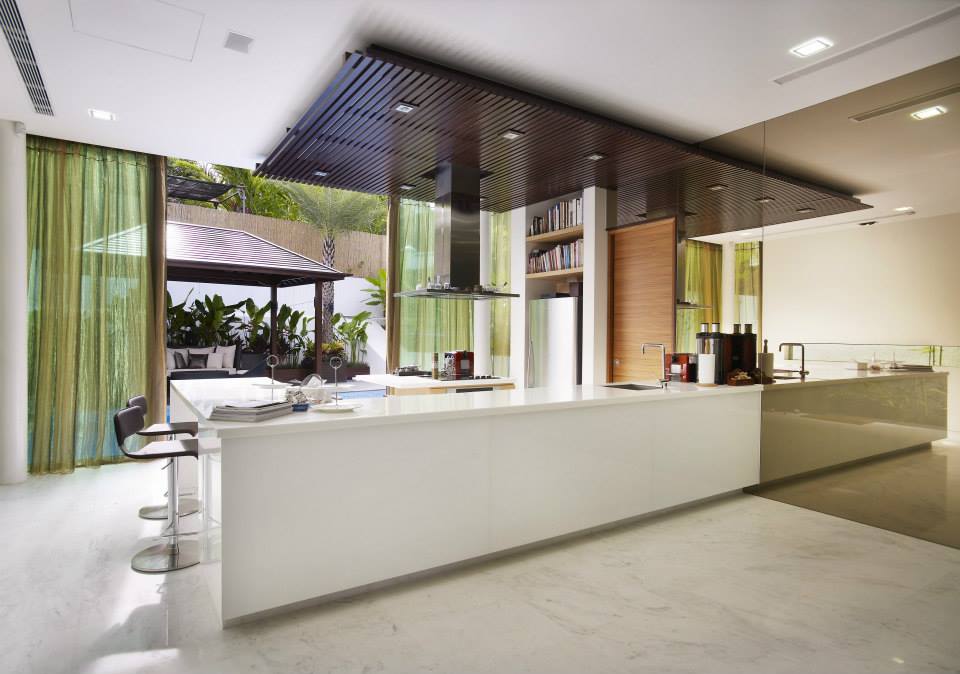
Landed Living Room Design: Deserves More Thought Than It Gets
In most Singapore apartments, the living room is defined. However, living room landed house interior design gives you a lot of choices. You have a lot of liberty to plan your living room the way you want to.
You can have it open-plan with the dining. You can push it toward the garden and put bifold doors across the full rear width. You can have a secondary family lounge on the second floor, so the ground floor becomes more formal. You can create a double-volume living room that borrows height from the floor above.
With so many options available, most homeowners often freeze. Quite often, we recommend our homeowners to ask themselves: how do we actually use this space?
Good landed interior design in Singapore isn’t about grand gestures.
Landed House Kitchen Design: Make the Most Out of it
Landed homes in Singapore have minimum plot sizes, ranging from 150 sqm for terrace houses up to over 1,400 sqm for Good Class Bungalows (GCBs), regulated by the Urban Redevelopment Authority (URA). In this, the kitchen occupies almost 14 – 30 sqm, giving you the privilege of designing the kitchen of your dreams.
In most Singaporean homes, the kitchen is the most underused one. With more added square footage that hdb flats do not offer, you can combine your kitchen with your dining area, and outdoor garden space. Here are a few ideas you can explore:
- A wet kitchen that opens to a covered outdoor dining pavilion
- A dry kitchen that flows into an indoor-outdoor living area
- A breakfast counter positioned to look onto the garden
If done poorly, it can ruin the vibe of the entire house. The key is deciding early how indoor and outdoor spaces relate to each other.
At Renozone, many of our landed house interior design projects in Singapore involve this indoor-outdoor conversation as a central design move. The 6 Daisy Avenue project is a good example of how a cohesive spatial relationship between kitchen, living, and outdoor garden can define the character of an entire home.
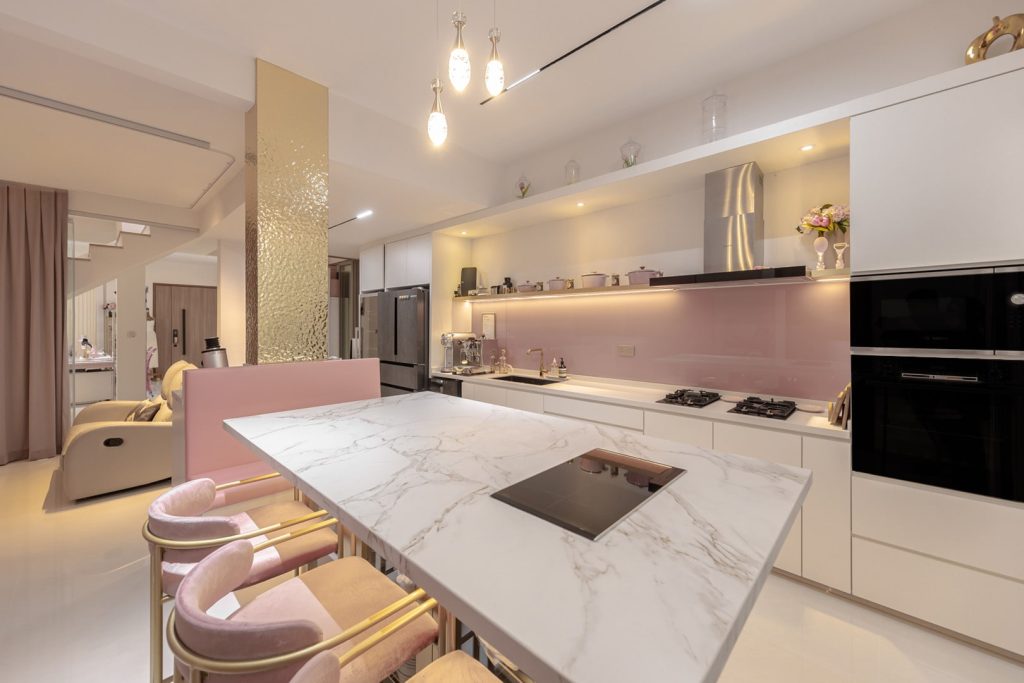
Why “Modern” Means Different Things at Different Scales
If you tell an interior designer you want a “modern” landed home, you’ll get ten different interpretations.
Modern design, at times, can mean
- Japandi Interior with warm tones, natural timber, and restrained detailing
- It can also mean concrete, steel, and dramatic lighting in an industrial-luxe direction.
- It can mean white walls, clean geometries, and a focus on art.
- It can also mean a smart technology home with lots of hidden storage.
The reason this matters more in a landed home than in an apartment is proportion. Design choices that look quietly confident in a 1,000 sqft condo can look stark or underfurnished spread across 3,000 sqft of landed floor space.
Coordination Is Everything
A landed renovation is not a simple project to manage. You will likely be working with
- Structural engineers (if you’re doing any hacking or additions),
- A main contractor,
- Sub-contractors for carpentry, tiling, plumbing, and electrical,
- Suppliers for fittings, fixtures, and furniture.
Depending on the scope of work, you may also need to engage with BCA for permits relating to structural changes, or with the LTA if your renovation affects the road reserve boundary.
When it comes to landed interior design in Singapore, you don’t just need a firm that just designs for aesthetics. You need a firm that can everything from concept to completion. This is something Renozone takes seriously. Our end-to-end service model means we handle the design, the renovation management, the permits, and the quality control from start to finish.
What a Landed Renovation Actually Costs in Singapore
Realistic budgeting is a conversation that happens too late in most projects.For a landed home in Singapore, modern interior design and renovation typically starts at around $80,000 for a terrace house with moderate scope — and scales significantly with size, materials, structural work, and the level of customisation.
A semi-detached with three floors of full renovation, custom carpentry throughout, and mid-to-high specification finishes will comfortably reach $150,000 to $250,000. Larger detached homes or projects with substantial structural intervention can go higher still.
Knowing these numbers before you begin your renovation project can help you budget your renovation carefully.
- Since floor finishes and built-in carpentry last longer, it is recommended that you invest there.
- Fitting and furnishes, on the otherhand, can be updated over time so you don’t have to spend most of your budget there.
A good interior design firm will help you understand where the money actually goes in a landed renovation and where you can exercise restraint without compromising the overall quality of the result.
What Materials Do I Need to Use in Landed Renovation Singapore?
Singapore is known for its tropical and humid climate. Here are a few materials that you should be using to tackle Singaporean weather:
- Porcelain Tiles: They are low maintenance and weather resistant so its best you use them in living room, kitchens and outdoors.
- SPC Flooring: These tiles are one of the best choices for bedrooms and family lounges because they are not only more stable in Singaporean humidity but also termite and water-resistant.
- Countertops: For countertops, most Singaporeans prefer to use Quartz or Sintered Stone because they are non-porous, heat and scratch-resistant.
- Marine Plywood: This material is best for cabinetry because they are long lasting.
- Paint: If you have children around the house, you should use anti-mould and washable paint.
Starting Your Landed House Interior Design
The homeowners who end up happiest with their landed interior design in Singapore are almost always the ones who started the conversation with their designer early — before the renovation works began, before they’d committed to a floor plan, and certainly before they’d started browsing tiles on their own.
The decisions you make in the first few weeks of the design process will shape everything that follows. Renozone has been part of those early conversations with Singapore homeowners for many years now. Our landed interior design portfolio spans terrace houses, semi-detached properties, and cluster bungalows across the island — each one designed around the specific way that the family wants to live.
Frequently Asked Questions
How much does landed house interior design cost in Singapore?
A moderate landed renovation in Singapore typically starts from around SGD 80,000, while larger semi-detached and detached homes can exceed SGD 250,000 depending on structural work, materials, and customisation.
How long does a landed home renovation take?
A typical timeline is:
- Terrace house: 3–5 months
- Semi-detached house: 5–8 months
- Detached bungalow: 6–12 months
Complex structural works may take longer.
What flooring works best for Singapore’s humid climate?
Porcelain tiles, SPC flooring, and engineered wood are among the most recommended options because they handle humidity better than traditional laminate or untreated timber.
Is open-concept design suitable for landed homes?
Open-concept layouts work well in landed homes when ventilation, storage, and humidity control are carefully planned. Families who prefer privacy or low-maintenance living may prefer semi-open layouts instead.
What are the most common mistakes homeowners make in landed renovations?
Common mistakes include:
- Poor ventilation planning
- Underestimating renovation costs
- Insufficient storage
- Weak lighting design
- Neglecting waterproofing
- Treating landed homes like oversized condos
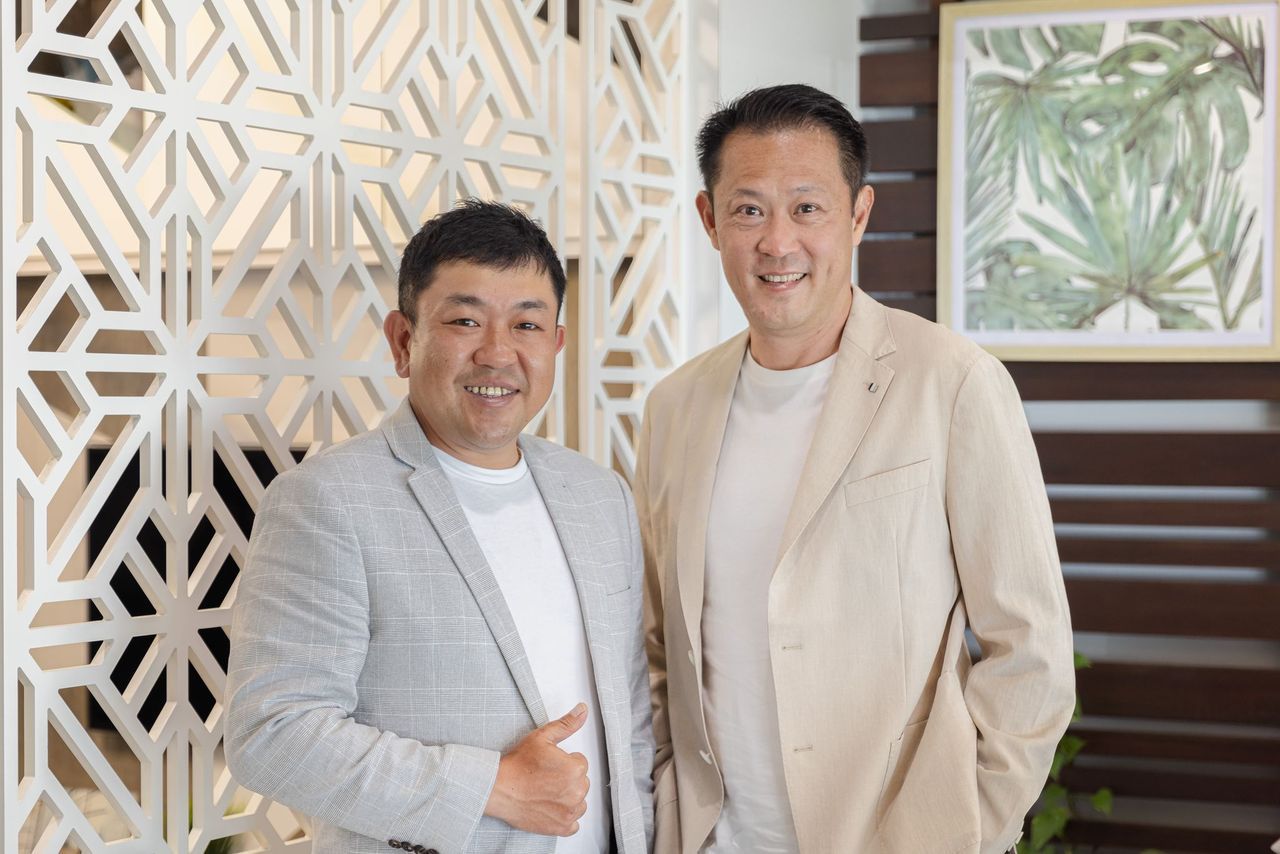
Est. Since 1998
Renozone Interior Design
Renozone Interior Design is one of Singapore's reputable interior design companies since 1998. With our well-tested professional capabilities, client-oriented service, and attention to detail, we ensure our client needs are fulfilled and met beyond their expectations. Our extensive portfolio comprises high-profile projects in both residential (HDB, condo, landed properties) and commercial interior designs.
Services We Provide:
Accreditations
Trusted By Clients









Accreditations
Trusted By Clients